Welcome Message
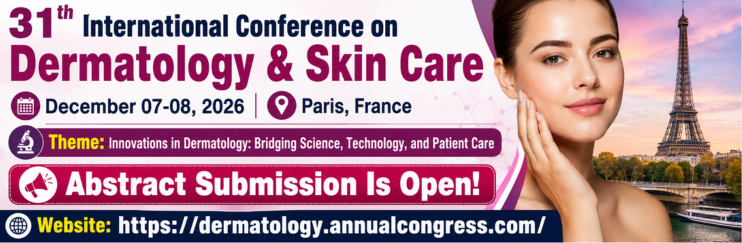
31st International Conference on Dermatology & Skin Care
December 07-08, 2026 | Paris, France
Theme: “Innovations in Dermatology: Bridging Science, Technology, and Patient Care”
Dear Esteemed Participants,
It is our great pleasure to welcome you to the 31st International Conference on Dermatology & Skin Care, taking place on December 07-08, 2026, in the historic and vibrant city of Paris, France.
This conference brings together leading dermatologists, researchers, healthcare professionals, and industry experts from around the world to share knowledge, exchange ideas, and explore the latest advancements in dermatology and skin care. Under the theme “Innovations in Dermatology: Bridging Science, Technology, and Patient Care,” we aim to highlight cutting-edge research, emerging technologies, and integrated approaches that are shaping the future of skin health.
Over the course of two days, attendees will have the opportunity to engage in insightful keynote sessions, interactive discussions, and networking opportunities designed to foster collaboration and inspire innovation.
We are confident that this conference will provide a valuable platform for learning, professional growth, and meaningful connections. We look forward to your active participation and to making this event a memorable and enriching experience for all.
Welcome to Paris, and welcome to an inspiring journey in dermatology and skin care.
Warm regards,
Organizing Committee
31st International Conference on Dermatology & Skin Care
About Dermatology-2026
The 31st International Conference on Dermatology & Skin Care will be held on December 07-08, 2026, in Paris, France. This global event is designed to bring together dermatologists, researchers, clinicians, academicians, and industry professionals to share knowledge and discuss the latest developments in dermatology and skin care.
The conference focuses on the theme “Innovations in Dermatology: Bridging Science, Technology, and Patient Care,” highlighting advancements in clinical practices, cosmetic dermatology, skin disorders, dermatopathology, and emerging technologies in skin health. It provides a platform for participants to present their research, explore new treatment approaches, and engage in meaningful discussions on current challenges and future directions in dermatology.
Attendees will benefit from keynote presentations, scientific sessions, panel discussions, and networking opportunities that encourage collaboration and knowledge exchange. The event also offers an excellent opportunity for professionals to connect with peers, discover innovative products and solutions, and enhance their expertise in the field.
Why to Attend
-
Gain knowledge about the latest research, innovations, and trends in dermatology and skin care
-
Learn from experienced speakers and industry experts through keynote sessions and presentations
-
Explore new technologies, treatments, and techniques in clinical and cosmetic dermatology
-
Network with dermatologists, researchers, academicians, and healthcare professionals from around the world
-
Share your research findings and receive valuable feedback from experts
-
Discover new products and solutions from leading organizations and exhibitors
-
Build professional connections and potential collaborations for future projects
-
Enhance your skills and stay competitive in your field
-
Experience an international platform for learning, discussion, and knowledge exchange
-
Contribute to advancements in dermatology and improved patient care
Target Audience
-
Dermatologists and skin care specialists
-
Cosmetologists and aesthetic practitioners
-
Clinical researchers and scientists in dermatology
-
Healthcare professionals and medical practitioners
-
Academicians and faculty members from universities and institutions
-
Pharmaceutical and biotechnology professionals
-
Dermatopathologists and immunologists
-
Plastic surgeons and cosmetic surgeons
-
Nurses and allied healthcare professionals
-
Students and early-career researchers in dermatology and related fields
-
Industry experts, product developers, and marketing professionals in skincare and cosmetics
-
Healthcare organizations and policy makers interested in skin health
Sessions & Tracks
Session 01: Advances in Clinical Dermatology
Advances in clinical dermatology focus on the latest developments in diagnosing and managing a wide range of skin conditions through evidence-based and patient-centered approaches. With rapid progress in medical science, there is a growing understanding of the pathophysiology of skin diseases, enabling more accurate diagnoses and effective treatments. This area highlights recent advancements in managing common and complex conditions such as acne, psoriasis, eczema, rosacea, and pigmentary disorders, along with the increasing role of personalized medicine that considers genetic, environmental, and lifestyle factors. The integration of modern diagnostic tools like dermoscopy and non-invasive imaging has significantly improved early detection and monitoring of skin diseases. In addition, innovative pharmacological treatments, including biologics and targeted therapies, have transformed the management of chronic inflammatory conditions by offering better outcomes and safety profiles. Ongoing challenges such as treatment resistance, side effects, and patient adherence are also addressed, with emphasis on patient education and multidisciplinary care. Preventive dermatology and early intervention play a crucial role in reducing disease burden, while continuous research and technological advancements are shaping the future of clinical practice.
Session 02: Cosmetic Dermatology and Aesthetic Procedures
Cosmetic dermatology and aesthetic procedures focus on enhancing skin appearance, improving confidence, and addressing aesthetic concerns through both non-invasive and minimally invasive techniques. This area has seen significant growth due to increasing demand for safe and effective treatments that deliver natural-looking results. It covers a wide range of procedures including chemical peels, microdermabrasion, dermal fillers, botulinum toxin injections, laser treatments, and skin rejuvenation therapies. Advances in technology have enabled more precise and customized treatments tailored to individual skin types and concerns such as aging, pigmentation, acne scars, and uneven texture. Emphasis is placed on patient safety, proper technique, and ethical practice while achieving optimal cosmetic outcomes. This topic also explores the role of skincare products, anti-aging solutions, and combination therapies that integrate clinical procedures with daily skin maintenance. In addition, discussions include emerging trends, innovations, and the psychological impact of aesthetic treatments, highlighting the importance of holistic care and patient satisfaction in modern cosmetic dermatology.
Session 03: Pediatric Dermatology
Pediatric dermatology focuses on the diagnosis and management of skin conditions affecting infants, children, and adolescents, considering the unique characteristics of developing skin. This area addresses a wide range of conditions including birthmarks, genetic skin disorders, atopic dermatitis, infections, and allergic reactions commonly seen in younger populations. Early diagnosis and age-appropriate treatment are essential to prevent complications and ensure healthy skin development. Gentle therapies and tailored approaches are emphasized, as children’s skin is more sensitive than adults’. The role of parental guidance and education is critical in helping caregivers understand preventive measures, hygiene practices, and treatment adherence. Advances include improved diagnostic techniques, safer medications, and a better understanding of hereditary and environmental influences on skin health. Multidisciplinary care involving pediatricians and dermatologists is encouraged to provide comprehensive treatment and improve the overall quality of life for young patients.
Session 04: Dermatopathology and Skin Diagnostics
Dermatopathology and skin diagnostics focus on the microscopic and laboratory evaluation of skin diseases, providing a bridge between clinical dermatology and pathology. This area emphasizes the accurate diagnosis of complex skin conditions through techniques such as histopathology, immunohistochemistry, molecular testing, and digital imaging. Participants will explore the identification of inflammatory, infectious, autoimmune, and neoplastic skin disorders, highlighting how precise diagnostic tools contribute to targeted treatment plans. Advances in non-invasive imaging, including confocal microscopy, optical coherence tomography, and dermoscopy, allow for earlier detection and monitoring of skin diseases without the need for extensive biopsies. The integration of molecular diagnostics and genetic testing has enhanced understanding of hereditary and rare dermatologic disorders, improving both prognosis and treatment options. The discussion also covers common diagnostic challenges, such as distinguishing benign from malignant lesions, interpreting subtle histological changes, and correlating clinical and laboratory findings. By the end of this topic, participants will gain comprehensive insights into modern dermatopathology techniques, emerging diagnostic technologies, and their critical role in supporting effective patient care.
Session 05: Immunodermatology
Immunodermatology explores the interplay between the immune system and the skin, focusing on the diagnosis and treatment of immune-mediated dermatologic conditions. This field addresses diseases such as autoimmune blistering disorders, lupus erythematosus, vasculitis, and chronic inflammatory skin conditions where immune dysregulation plays a central role. Participants will learn about the underlying immunopathogenesis of these disorders, which guides the development of targeted therapies including biologics, immunosuppressants, and novel immunomodulatory agents. Advances in laboratory techniques, such as immunofluorescence, flow cytometry, and serological testing, are improving diagnostic accuracy and helping clinicians monitor disease activity more effectively. The topic also emphasizes the importance of early recognition and multidisciplinary management to prevent long-term complications and improve patient outcomes. Emerging research on the skin-immune interface is providing new insights into both therapeutic targets and preventive strategies. By the end of this discussion, attendees will understand the mechanisms of immune-mediated skin diseases, the latest diagnostic tools, and current approaches to safe and effective management.
Session 06: Skin Cancer and Dermato-Oncology
Skin cancer and dermato-oncology cover the prevention, diagnosis, and treatment of malignant and pre-malignant skin conditions, including melanoma, basal cell carcinoma, squamous cell carcinoma, and rare cutaneous tumors. This topic emphasizes the importance of early detection through clinical examination, dermoscopy, imaging, and histopathology. Participants will explore advances in surgical techniques, including Mohs micrographic surgery, as well as systemic therapies such as targeted therapy and immunotherapy that have improved survival rates and outcomes for patients with advanced disease. Discussions also include risk factors, preventive strategies, public awareness campaigns, and patient education to reduce the incidence and impact of skin cancer. The role of genetic profiling, biomarkers, and personalized medicine is highlighted, demonstrating how tailored treatment approaches are transforming dermato-oncology care. Challenges such as treatment resistance, recurrence, and long-term monitoring are addressed, along with the importance of multidisciplinary care involving dermatologists, oncologists, and surgeons. By the end of this topic, participants will gain comprehensive knowledge of current and emerging strategies in skin cancer management and prevention.
Session 07: Laser Therapy and Advanced Technologies
Laser therapy and advanced technologies in dermatology focus on the application of energy-based devices for the treatment of both medical and cosmetic skin conditions. This topic covers a wide range of laser types, including ablative and non-ablative lasers, pulsed dye lasers, fractional lasers, and intense pulsed light systems. Participants will learn about treatment strategies for acne scars, vascular lesions, pigmentation disorders, tattoo removal, hair removal, and skin rejuvenation. Emphasis is placed on selecting the appropriate device, customizing treatment parameters, ensuring patient safety, and managing side effects. Advances in technology have enabled more precise, effective, and minimally invasive procedures that deliver predictable outcomes. Discussions also include emerging energy-based devices such as radiofrequency, ultrasound, and cryolipolysis, highlighting their role in non-surgical aesthetic treatments. By understanding the principles, indications, and limitations of these technologies, participants will be equipped to incorporate laser and advanced modalities into clinical practice effectively.
Session 08: Hair and Scalp Disorders (Trichology)
Hair and scalp disorders focus on the diagnosis, treatment, and prevention of conditions affecting hair growth, texture, and scalp health. Common issues include androgenetic alopecia, alopecia areata, telogen effluvium, hair shaft disorders, dandruff, seborrheic dermatitis, and scalp infections. This topic emphasizes the importance of a thorough clinical evaluation, including history-taking, scalp examination, trichoscopy, and laboratory investigations to identify underlying causes. Advances in treatment include the use of topical and systemic therapies, biologics, platelet-rich plasma therapy, hair transplantation techniques, and emerging regenerative approaches. Nutritional, hormonal, and genetic factors influencing hair health are also considered, along with patient counseling to manage expectations and improve adherence to long-term treatment plans. The discussion highlights the role of preventive care, early intervention, and multidisciplinary approaches involving dermatologists, endocrinologists, and nutritionists to optimize hair and scalp outcomes. By the end of this topic, participants will gain comprehensive insights into evidence-based management strategies for common and complex hair disorders.
Session 09: Nail Disorders and Treatments
Nail disorders and treatments focus on the evaluation, diagnosis, and management of a wide range of conditions affecting the fingernails and toenails. Common conditions include fungal infections (onychomycosis), psoriasis-related nail changes, traumatic nail disorders, brittle nails, ingrown nails, and nail tumors. Participants will explore clinical assessment techniques, including dermoscopy and microbiological investigations, to achieve accurate diagnosis. Advances in treatment include systemic and topical antifungal therapies, surgical interventions, laser therapy, and novel pharmacological approaches. Emphasis is placed on differentiating benign from malignant nail lesions and recognizing signs that require urgent referral. Preventive strategies, patient education, and ongoing monitoring are critical for maintaining nail health and preventing recurrence. By understanding the etiology, clinical features, and management options for various nail disorders, attendees will be equipped to provide comprehensive care and improve patient outcomes in daily dermatology practice.
Session 10: Infectious Skin Diseases
Infectious skin diseases cover bacterial, viral, fungal, and parasitic infections that affect the skin and mucous membranes. This topic emphasizes accurate diagnosis, effective treatment, and preventive strategies to reduce disease transmission and complications. Participants will learn about common conditions such as impetigo, cellulitis, herpes simplex, herpes zoster, warts, dermatophytosis, candidiasis, scabies, and pediculosis. Advances in diagnostic techniques, including culture methods, PCR testing, and dermoscopy, allow for rapid and precise identification of pathogens. Management strategies include topical and systemic antimicrobial therapy, immunization where applicable, and patient education on hygiene and prevention. Emerging infectious agents, antimicrobial resistance, and the importance of public health measures are also discussed. By the end of this topic, attendees will gain a comprehensive understanding of modern approaches to diagnosing, treating, and preventing infectious skin diseases while minimizing complications and improving patient care.
Session 11: Anti-Aging and Regenerative Dermatology
Anti-aging and regenerative dermatology focus on preventing and reversing the signs of skin aging using innovative therapies that restore skin structure and function. Participants will explore cellular and molecular mechanisms of aging, including the roles of oxidative stress, collagen degradation, and telomere shortening. Treatments covered include topical antioxidants, retinoids, growth factors, stem cell therapy, platelet-rich plasma, microneedling, laser resurfacing, and combination regenerative therapies. Emphasis is placed on personalized treatment plans tailored to individual skin types, concerns, and age-related changes. Participants will also learn about the integration of lifestyle, nutrition, and preventive strategies to enhance skin health and longevity. Ethical considerations, patient safety, and evidence-based approaches are emphasized to achieve natural and sustainable results. By the end of this topic, attendees will have a clear understanding of modern anti-aging strategies, regenerative techniques, and how to incorporate these therapies effectively into clinical practice.
Session 12: Dermatology in Primary Care
Dermatology in primary care emphasizes the role of general practitioners and primary healthcare providers in the early recognition, diagnosis, and management of common skin conditions. Many patients first present to primary care settings with dermatologic issues such as eczema, acne, fungal infections, rashes, and allergic reactions. This topic highlights practical approaches for accurate assessment, triage, and referral when specialized care is needed. Participants will learn about diagnostic tools, treatment guidelines, and patient counseling strategies suitable for a primary care setting. Emphasis is placed on cost-effective therapies, preventive care, patient education, and the importance of multidisciplinary collaboration to ensure timely and appropriate management. The topic also addresses challenges such as distinguishing benign from serious conditions and managing chronic skin diseases within limited resources. By the end of this discussion, attendees will understand how to integrate dermatology principles into primary care effectively, improving patient outcomes and promoting overall skin health.
Session 13: Teledermatology and Digital Health
Teledermatology and digital health focus on the use of technology to provide dermatological care remotely, improving access to specialists and enhancing patient management. This topic covers platforms for virtual consultations, store-and-forward imaging, mobile health applications, and AI-assisted diagnostic tools. Participants will explore how digital technology supports early detection, monitoring of chronic skin conditions, and patient engagement, especially in underserved or remote areas. Advantages include reduced waiting times, convenience, and improved follow-up, while challenges such as image quality, data security, and regulatory considerations are addressed. The discussion also highlights emerging trends in AI, machine learning, and wearable devices that assist in diagnostics, risk assessment, and personalized treatment recommendations. By the end of this topic, attendees will gain insight into integrating teledermatology and digital innovations into clinical practice, enhancing efficiency, patient satisfaction, and accessibility of dermatologic care.
Session 14: Psoriasis and Chronic Skin Disorders
Psoriasis and chronic skin disorders focus on the pathophysiology, diagnosis, and management of long-term dermatologic conditions that significantly impact quality of life. Participants will explore immune-mediated diseases such as psoriasis, atopic dermatitis, lichen planus, and chronic urticaria, emphasizing evidence-based treatment approaches. Advances in systemic therapies, biologics, and targeted treatments have transformed outcomes for patients with moderate to severe disease. The topic also covers comorbidities associated with chronic skin disorders, including cardiovascular disease, metabolic syndrome, and psychosocial challenges. Early recognition, individualized care plans, and patient education are emphasized to improve adherence and long-term management. By the end of this discussion, participants will understand modern strategies for treating chronic dermatologic conditions and integrating comprehensive care to enhance patient outcomes.
Session 15: Allergy and Contact Dermatitis
Allergy and contact dermatitis focus on the identification, management, and prevention of immune-mediated skin reactions caused by allergens, irritants, or environmental exposures. Participants will learn about patch testing, clinical assessment, and laboratory investigations for accurate diagnosis. Common conditions include atopic dermatitis, occupational dermatitis, urticaria, and hypersensitivity reactions. Treatment strategies involve avoidance of triggers, topical and systemic therapies, and patient counseling on preventive measures. Emerging research on immunologic mechanisms and novel therapies is discussed, highlighting advancements in targeted treatment approaches. Emphasis is placed on patient education, long-term management, and improving quality of life for individuals affected by allergic and irritant skin conditions. By the end of this topic, attendees will gain a comprehensive understanding of diagnostic techniques, treatment options, and preventive strategies for allergy-related dermatologic disorders.
Session 16: Wound Care and Dermatologic Surgery
Wound care and dermatologic surgery focus on the management of acute and chronic wounds as well as surgical procedures for various skin conditions. This topic covers surgical excision, biopsy techniques, Mohs micrographic surgery, skin grafting, and reconstructive procedures for both medical and cosmetic purposes. Participants will learn about advanced wound care strategies, including the use of dressings, topical agents, negative pressure therapy, and regenerative technologies that promote faster healing and reduce complications. Emphasis is placed on accurate diagnosis, patient assessment, infection control, and post-operative care. The topic also addresses challenges such as chronic ulcers, diabetic foot wounds, pressure injuries, and post-surgical scarring. By the end of this discussion, attendees will understand evidence-based approaches for managing complex wounds, performing dermatologic surgeries safely, and improving functional and aesthetic outcomes for patients.
Session 17: Cosmetic Formulations and Skincare Products
Cosmetic formulations and skincare products focus on the science behind topical preparations, including creams, lotions, serums, sunscreens, and cosmeceuticals. Participants will learn about the formulation principles, active ingredients, mechanisms of action, and efficacy evaluation. This topic emphasizes personalized skincare approaches, ingredient safety, and regulatory considerations. Discussions include advances in anti-aging formulations, moisturizers, acne treatments, skin brightening products, and products for sensitive skin. The role of evidence-based product selection in complementing dermatologic procedures is highlighted, along with emerging trends in natural and biotechnology-based ingredients. By the end of this topic, attendees will gain knowledge of how to integrate cosmetic formulations effectively into patient care to enhance skin health, treatment outcomes, and patient satisfaction.
Session 18: Global Dermatology and Public Health
Global dermatology and public health examine skin health from an epidemiological and population-based perspective. This topic addresses the prevalence of dermatologic diseases worldwide, access to care, disparities in treatment, and strategies for prevention and awareness. Participants will explore infectious skin diseases, neglected tropical dermatoses, environmental skin hazards, and emerging global trends such as the impact of climate change on skin health. Public health interventions, vaccination programs, community outreach, and health education campaigns are discussed as key tools for reducing disease burden. The topic also highlights collaborative efforts between governments, non-profit organizations, and international dermatology societies to promote skin health globally. By the end of this discussion, attendees will understand the importance of integrating dermatology into public health frameworks and developing strategies to improve skin care access and outcomes worldwide.
Session 19: Dermatology Nursing and Patient Care
Dermatology nursing and patient care focus on the essential role of nurses and allied healthcare professionals in supporting dermatology practice. This topic covers patient assessment, wound care, medication administration, education, counseling, and psychosocial support for patients with acute and chronic skin conditions. Participants will explore evidence-based nursing interventions for managing conditions such as eczema, psoriasis, skin infections, post-surgical care, and cosmetic procedures. Emphasis is placed on enhancing patient compliance, improving quality of life, and fostering effective communication between patients, families, and the healthcare team. The discussion also includes professional development, continuing education, and strategies to integrate nursing expertise into dermatology practice. By the end of this topic, attendees will understand the critical contributions of dermatology nurses in delivering high-quality, patient-centered care.
Session 20: Emerging Trends and Future Innovations in Dermatology
Emerging trends and future innovations in dermatology focus on technological, scientific, and clinical advances shaping the future of skin care. Participants will explore breakthroughs in gene therapy, regenerative medicine, artificial intelligence, digital diagnostics, teledermatology, and wearable skin monitoring devices. The topic also highlights novel therapies for inflammatory, autoimmune, and neoplastic skin disorders, as well as advances in cosmetic and anti-aging treatments. Emphasis is placed on integrating research, technology, and clinical practice to improve patient outcomes, enhance accessibility, and optimize healthcare delivery. Ethical considerations, safety, cost-effectiveness, and regulatory compliance are discussed as critical components of adopting new innovations.
Market Analysis Report
31st International Conference on Dermatology & Skin Care
December 07-08, 2026 | Paris, France
Theme: Innovations in Dermatology: Bridging Science, Technology, and Patient Care
The 31st International Conference on Dermatology & Skin Care is proud to welcome delegates, researchers, clinicians, industry professionals, and thought leaders from around the world to Rome, Italy. Dermatology 2026 offers an international platform to share insights, engage in meaningful discussions, and explore pioneering advancements in dermatology and skin care.
Conference Vision
The core vision of Dermatology 2026 is to unify dermatology professionals from academia, clinical practice, and industry to expedite cutting-edge research, facilitate knowledge exchange, and foster collaboration. The conference aims to bridge scientific discovery with technological innovation and patient-centered care, accelerating progress across all facets of skin health and dermatologic treatment.
By strengthening global partnerships and encouraging interdisciplinary cooperation, Dermatology 2026 seeks to drive innovation, improve clinical outcomes, and promote sustainable solutions for skin health challenges worldwide.
Global Dermatology Market Landscape
The dermatology and skin care market continues to experience robust growth, driven by rising incidence of skin diseases, increased public awareness, and growing demand for advanced treatment options. The global landscape reflects strong investment in dermatological research, rapid adoption of digital technologies, and expanding patient access to innovative therapies.
Epidemiology and Market Growth
-
Skin Cancer: Incidence of both non-melanoma and melanoma skin cancers is increasing globally, encouraging investment in early detection technologies, immunotherapies, and preventative skin care solutions.
-
Atopic Dermatitis and Eczema: The burden of atopic dermatitis has risen significantly, particularly in urban regions; this has spurred development of targeted biologic drugs and personalized treatment regimens.
-
Psoriasis and Chronic Inflammatory Disorders: With improved understanding of immune-mediated mechanisms, biologics, small molecules, and precision therapies are expanding treatment options and patient outcomes.
Market Dynamics
-
Dermatology Devices Market: The demand for minimally invasive and non-invasive devices—such as lasers, radiofrequency systems, and diagnostic imaging solutions—continues to grow, with the segment forecasted to sustain double-digit growth.
-
Biologic and Targeted Therapies: Biologic drugs for moderate-to-severe dermatologic diseases dominate clinical pipelines and commercial growth, supported by strong patent portfolios and ongoing clinical trials.
-
Aesthetic and Cosmetic Procedures: Renewed interest in aesthetic dermatology, patient preference for non-surgical procedures, and digital consultations support vibrant market dynamics.
Leading Global Institutions in Dermatology
Asia-Pacific:
-
University of Tokyo Hospital – Japan
-
Seoul National University – Korea
-
National Skin Centre – Singapore
-
All India Institute of Medical Sciences – India
-
China Medical University Hospital – Taiwan
-
Mahidol University Faculty of Medicine – Thailand
Europe:
-
University of Oxford Dermatology – UK
-
Charité – Universitätsmedizin Berlin – Germany
-
University of Milan School of Medicine – Italy
-
University of Copenhagen – Denmark
-
European Academy of Dermatology and Venereology – Switzerland
-
Ghent University – Belgium
North America:
-
Harvard Medical School Dermatology – USA
-
Stanford University School of Medicine – USA
-
University of Toronto Faculty of Medicine – Canada
-
University of California, San Francisco – USA
-
Mayo Clinic Department of Dermatology – USA
-
Johns Hopkins University Dermatology – USA
Dermatology Research Centers Worldwide
-
Cutaneous Biology Research Center – USA
-
Skin and Stem Cell Laboratory – UK
-
Dermatology Innovations Institute – Canada
-
National Skin Research Institute – Australia
-
Institut Pasteur Dermatology Unit – France
-
Advanced Dermatologic Research Center – Germany
Key Funding Bodies and Support Organizations
-
American Academy of Dermatology (AAD) – USA
-
European Academy of Dermatology and Venereology (EADV) – Switzerland
-
International League of Dermatological Societies (ILDS) – Global
-
National Institutes of Health (NIH) – USA
-
Skin Health Alliance – UK
-
Korean Dermatological Association – Korea
-
The Skin Cancer Foundation – USA
-
Asian Academy of Dermatology and Venereology – Korea
Global Dermatology Societies and Organizations
-
American Academy of Dermatology
-
European Academy of Dermatology and Venereology
-
International Society of Dermatology
-
Asian Academy of Dermatology and Venereology
-
British Association of Dermatologists
-
American Society for Dermatologic Surgery
-
Society for Pediatric Dermatology
-
International Dermoscopy Society
-
World Congress of Dermatology
Market Trends & Future Outlook
The dermatology market is being reshaped by several key trends:
-
Digital Health Integration: Teledermatology, AI-powered diagnostics, and mobile health tools are making dermatologic care more accessible and personalized.
-
Precision Medicine: Genetic and molecular profiling enables tailored treatments for conditions like psoriasis, vitiligo, and melanoma.
-
Regenerative Technologies: Stem cells, platelet-rich plasma, and tissue engineering are gaining traction in both clinical and aesthetic dermatology.
-
Patient-Centric Care Models: Holistic approaches that incorporate lifestyle, nutrition, and mental health are redefining standards in skin care and chronic disease management.
This market analysis highlights not only the economic momentum in dermatology and skin care, but also the innovative forces transforming clinical practice, research, and patient care worldwide.
Join us at 31st International Conference on Dermatology & Skin Care, December 07-08, 2026 | Paris, France | Innovations in Dermatology: Bridging Science, Technology, and Patient Care.
Participants & Participation Options
Speaker
-
Deliver keynote or invited lectures.
-
Share cutting-edge research, innovations, and insights with global delegates.
Delegate
-
Attend scientific sessions, panel discussions, and networking events.
-
Access conference materials and interact with experts across the field.
Poster Presenter
Exhibitor
-
Display products, technologies, or services in dedicated exhibition spaces.
-
Network with delegates, potential clients, and collaborators.
Video Presentation
E-Poster Presenter
Virtual Registration
-
Attend live-streamed keynote sessions, scientific presentations, and panel discussions online.
-
Access conference recordings, digital materials, and participate in virtual networking.
-
Ideal for international participants or those unable to attend in person.
Participant Benefits
-
Earn CPD/CME points
-
Networking opportunities with global experts and peers
-
Certificate of participation
-
DOI publication opportunities in conference proceedings
-
Access to cutting-edge research
-
Professional visibility for speakers, presenters, and exhibitors
-
Opportunities for global collaboration
Abstract Submission & Registration Timeline
-
Abstract Submission Open: Now Open
-
Early Bird Registration: June 22, 2026
-
Standard Registration: September 22, 2026
-
Final Registration Deadline: December 07, 2026
Abstract Submission Details:
-
All abstracts submitted will undergo a peer-review process to ensure scientific quality and relevance.
-
Authors will receive an Abstract Acceptance Letter upon approval, confirming inclusion in the conference program.
-
Accepted abstracts will be published in the conference proceedings with DOI, providing global visibility and citation opportunities.
For Inquiries
For any questions or assistance regarding abstract submission, registration, or participation, please contact:
You can also reach out via our social media channels for updates, announcements, and support.
Abstract submission link
Registration link
Join us at 31st International Conference on Dermatology & Skin Care, December 07-08, 2026 | Paris, France under the theme of Innovations in Dermatology: Bridging Science, Technology, and Patient Care.
Past Conference Report
Dermatology-2025
30th International Conference on Dermatology & Skin Care
December 08–09, 2025
Paris, France
Theme: Innovations and Emerging Trends in Dermatology: Shaping the Future of Skin Care
We are delighted to invite you to the 30th International Conference on Dermatology & Skin Care (Dermatology 2025), taking place in the vibrant city of Paris, France, on December 08–09, 2025.
This premier event will bring together leading dermatologists, researchers, healthcare professionals, academic scientists, and industry pioneers from across the globe to explore the latest innovations and future directions in dermatology and skin care.
Topics to be discussed include:
Dermatological Diseases, Acne, Blisters, Common Warts, Onychomycosis, Psoriasis, Dry Skin, Rosacea
Skin Cancer, Bacterial & Fungal Infections, Eczema & Dermatitis, Cosmetic Dermatology, Skin Grafting
Dermato-pathology, Trichology, and many more cutting-edge areas in skin science
Why Attend Dermatology 2025?
Global Networking with top-tier researchers and professionals
Interactive Sessions & Sub-Meetings focused on the latest procedures and treatments
Keynote Presentations by senior scientists and industry leaders
Young Researcher Forum, Poster Presentations, and Panel Discussions
Whether you are a seasoned expert or an emerging researcher, Dermatology 2025 offers a dynamic platform to share knowledge, foster collaborations, and gain insights into the evolving landscape of dermatology and skin care.
Join us in Paris to be part of a truly transformational experience in shaping the future of dermatology.
Past Reports Gallery